How We Design and Install Your Putting Green
A putting green is a more involved design project than a standard lawn replacement. The base engineering, surface selection, and contouring all affect whether the end product actually plays well. Here's how we work through it.
1
Initial Conversation — Goals and Space
We want to understand what you're actually trying to accomplish. Practice putting from various distances? Work on lag putting? Add a fringe area for chipping? The practice goals shape how the green is designed — the number of cups, the slope directions, the size of each putting zone.
2
Site Walk and Measurement
We visit your property and evaluate the available space, existing grade, surrounding landscaping, drainage, and sun exposure. We take measurements and photograph the area. We look at what's adjacent to the potential green space — pool, concrete patio, garden beds — so the integration is clean.
3
Custom Design and Layout
Using your goals and the site conditions, we design the green. This includes the outer shape, cup placement, slope direction and degree for each putting zone, and whether a fringe or collar area makes sense. We discuss the design with you before committing to any base work.
4
Base Construction and Contouring
The base is everything. We excavate to depth, install compacted aggregate, and build the contours into the base layer using precise grading. The slopes and breaks you'll practice against are created in the base — the surface follows the base. This step takes time and cannot be hurried.
5
Putting Surface Installation
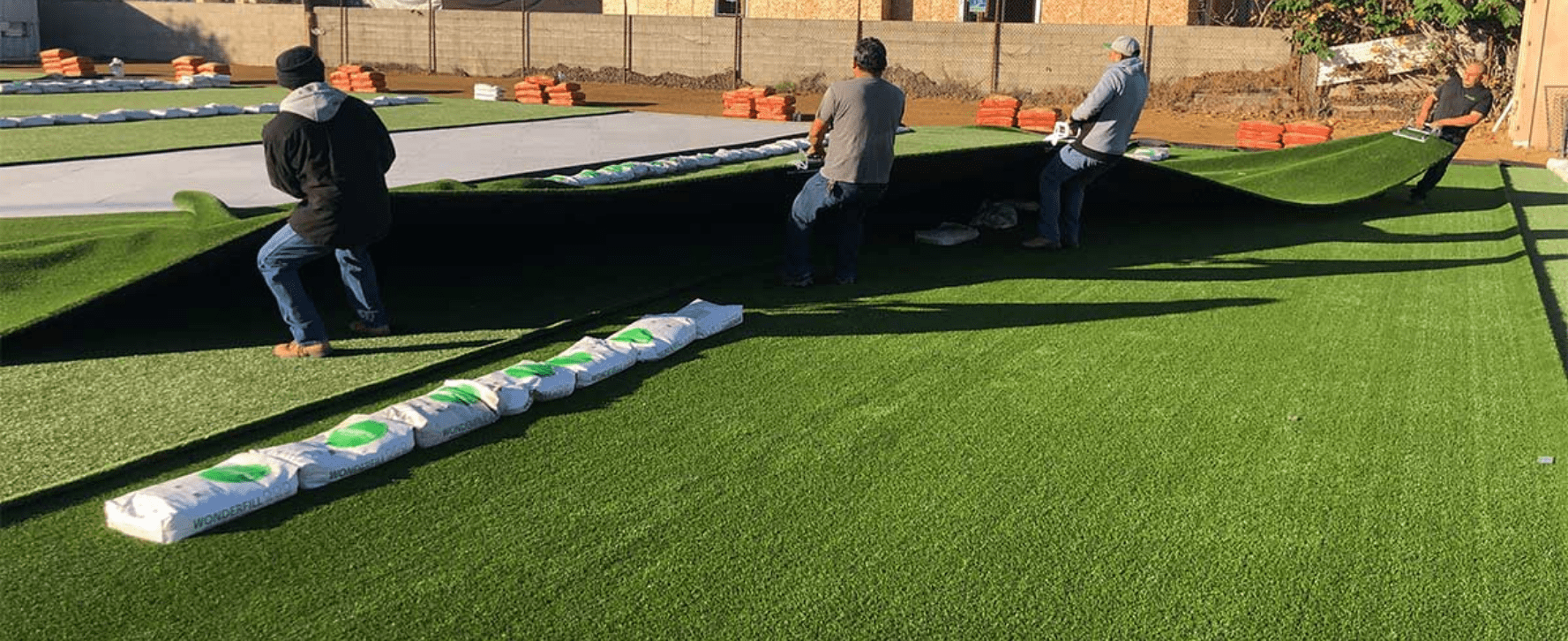
We install the purpose-specific putting green turf, cut to the designed shape. Seams, if any, are placed in low-traffic putting lines. Cup inserts go in at the planned locations. Infill is applied at the specific weight and depth appropriate for the selected putting surface product.
6
Surface Tuning and Test
We roll balls across the surface from multiple positions and verify consistency of roll. Infill levels get fine-tuned based on actual ball behavior, not just spec sheet numbers. The goal is a surface that putts predictably — neither too fast nor too slow for the typical Flower Mound backyard practice session.